

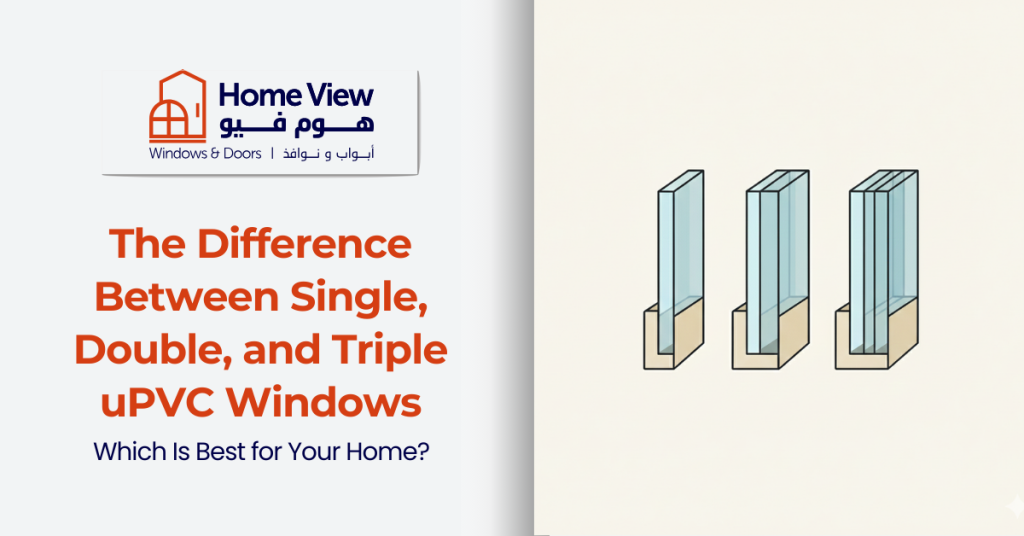
uPVC windows are available with different insulation levels depending on the number of glass layers used, coming in either Single, Double, or Triple glazing.
As the number of glass layers increases, the level of thermal and acoustic insulation rises, and the thickness of the sealed glass unit doubles. In a hot climate like that of the Kingdom, we at Home View Company are keen to guide customers toward choosing the optimal type for their homes among single, double, and triple uPVC windows.
What is the difference between Single, Double, and Triple uPVC windows?
A single glass unit contains one layer of glass, double glazing contains two layers with a gap between them filled with air or a special type of gas, while triple glazing contains three layers with two gaps between them. The precise difference between these types of windows appears in thermal insulation, acoustic insulation, as well as security and lifespan.
In the following paragraphs, we will explain these differences in a simplified manner to help you reach the appropriate choice for your home.
1- The difference in thermal insulation between Single, Double, and Triple uPVC windows
Thermal insulation is measured by the Heat Transfer Coefficient (U-value); for simplicity, we’ll call it the “U number”! The smaller this number is, the better the performance.
Traditional single glass has a very poor insulation coefficient of U≈5.2 W/m²K, while this value in double glazing (with an insulating coating and Argon gas) reaches approximately 1.2 – 1.6 W/m².
Modern triple glazing can reach insulation levels of 0.8 W/m²K or less. This means that triple glass insulates house heat almost twice as well as double glazing and provides about 50% better internal heat retention.
In short:
- Single Window: Poor thermal insulation, causing rapid loss of cooling and warmth.
- Double Window: Very good insulation, maintains internal temperature and reduces reliance on air conditioners.
- Triple Window: Best thermal insulation level, efficiently traps heat inside the room, especially in winter, and reduces heat entry in summer.
On the other hand, as layers increase, the thickness of the window frame increases (28 mm for double windows, and up to 36 mm for triple), which requires a deeper frame and professional installation that accounts for this thickness.
» Read also:
Quality Certificates for uPVC Windows: How to ensure you are buying the best?
2- Differences between windows in acoustic insulation
Increasing the number of layers also helps in reducing external noise, but it is not the only factor, as acoustic performance also depends on glass thickness and the quality of spacers. High-quality double windows often reduce noise by about 35 decibels.
Triple windows can reach similar or higher levels (up to 40 decibels in some large units). However, in practice, the third layer may not add a significant impact on acoustic insulation unless thick glass or special laminate layers are used.
In other words:
- Single Windows: Very low acoustic insulation (street noise enters easily).
- Double Units: Good acoustic insulation (comfortable for living rooms).
- Triple Windows: Provide the best acoustic insulation when used with special glass designed for this purpose; otherwise, the result may be similar to double glazing.
For example, if you live near a busy street or an airport, installing a triple glass unit with insulating laminate glass can reduce ambient noise significantly more than a double window.
3- Security among Single, Double, and Triple uPVC windows
The more glass layers and the thicker they are, the higher the security level. Triple windows are heavier and their glass is thicker than double, making them more durable and harder to break. The purpose of multi-layered windows here is not just insulation, but durability as well; the extra glass acts as an additional layer of protection.
Simply put:
- Single Windows: Least resistant to burglary and breaking (a hole can easily be made in a single layer of glass).
- Double Windows: Stronger than single (two glass layers separated by a cavity make them more rigid).
- Triple Windows: The strongest, doubling the protection layer and rigidity, especially if used with a multi-point locking system (usually available with most single, double, and triple uPVC windows).
4- Price
The number of glass layers directly affects the cost. Single windows are the cheapest (but they are less common today due to low efficiency).
Double windows are the popular choice and most balanced between cost and performance. As for the additional cost of triple glass, it usually ranges between 10% to 50% higher than double, depending on the window size and the additional glass specifications.
In short:
- Single Windows: Lowest initial cost, but they may cost you more in energy bills due to poor thermal insulation.
- Double Windows: Medium cost (it can be said they are a good economic choice for the insulation provided).
- Triple Windows: Highest price, but they invest in long-term savings (such as significantly reducing heating bills in cold homes).
Note that the final price is also affected by the type of uPVC frame itself (brand and manufacturer), and installation and maintenance services.
At Home View, we offer competitive prices and clarify potential glass quality differences when you choose, ensuring you achieve the best value for your budget.
5- Lifespan
Attention to manufacturing and installation quality is important to ensure a long window life. High-quality uPVC windows last about 25 – 30 years with good performance, and some reach 50 years with periodic maintenance and by avoiding extreme conditions.
The difference in the number of layers does not significantly affect the expected life of the frame itself, but it may increase structural pressures (triple glazing is heavier and requires a stronger frame).
Ultimately,
The lifespan rarely differs radically between single, double, and triple uPVC windows; it depends on manufacturing standards, glass quality, and seals. Attention to simple maintenance such as cleaning and checking hinge fluidity will increase the window’s life, regardless of its type.
Summary comparison between Single, Double, and Triple uPVC windows
The following table summarizes the most important differences between Single, Double, and Triple uPVC windows:
| Criteria | Single Glazed Window | Double Glazed Window | Triple Glazed Window |
| Thermal Insulation | Poor (U≈5.2 W/m²K) | Very Good (U≈1.2 – 1.6) | Excellent (U≈0.8) |
| Acoustic Insulation | Very Poor (much noise) | Good (~35 dB) | Better with dedicated glass (~40 dB) |
| Security | Least durable (one glass layer) | Reasonable durability (two layers) | Most durable (3 layers, extra protection) |
| Price | Lowest initial cost | Medium (common and effective) | Highest (~10 – 50% more than double) |
| Lifespan | Long (≈20 – 30 years) | Long (≈20 – 50 years) | Similar (≈20 – 50 years) |
Frequently Asked Questions about the differences between Single, Double, and Triple uPVC windows
What is the main difference between single and double windows?
Single windows have only one layer of glass, and their thermal and acoustic insulation is very poor. Double glazing contains two layers of glass with an air/gas gap between them, providing much better insulation performance and reducing air conditioning and heating costs.
Is triple glazing worth the higher cost?
That depends on your needs. Triple glass provides the highest degree of thermal insulation, at a rate approximately 50% better than double, which is useful for those living in cold areas or those highly exposed to noise.
However, it is higher in cost and needs a frame with special specifications to hold it. If your home is in moderate temperature areas and does not face strong noise, high-quality double units are sufficient and come at a reasonable cost.
What is the lifespan of double and triple uPVC windows?
The lifespan of uPVC windows depends on manufacturing and installation quality. They generally last about 20 – 30 years without significant problems,and can last up to 50 years or more if materials and maintenance are well chosen.
What is the acoustic insulation level of triple glazing compared to double?
Double windows usually reduce noise by about 35 decibels. Triple glass can insulate up to 40 decibels or more if thick glass or special insulating layers are used.
But without using acoustically reinforced glass, the difference from the double type may be slight; therefore, when choosing triple windows, it is necessary to select appropriate glass and laminate films that significantly increase acoustic insulation.
How does the choice of glass layer number affect window security?
The more glass layers and the thicker they are, the more resistant the window becomes to breaking. Triple windows (with three glass panes) are more rigid and secure than double ones because they contain an additional layer protecting the interior.
When choosing, also ensure there is a multi-point locking system for the uPVC system (available at Home View), as it raises the security level regardless of the number of layers.
Conclusion between Single, Double, and Triple uPVC windows
Choosing the right uPVC windows for your home depends on environmental conditions, the home’s surroundings, and your budget. Single windows have a lower initial price cost but lack efficiency.
While a double window provides an ideal balance between performance and price, and most people adopt it for homes. Triple windows give you the maximum degrees of insulation and security, but they suit homes facing extreme temperatures or significant external noise.
At Home View Saudi Arabia we are ready to help you make the optimal decision. Our experts in the Windows and Doors Showroom in Khobar will explain the options to you in a friendly and simplified manner, keeping your home’s specific needs in mind.
Consult us today and experience the difference practically for yourself before buying, as the comfort in your new home starts here.


