

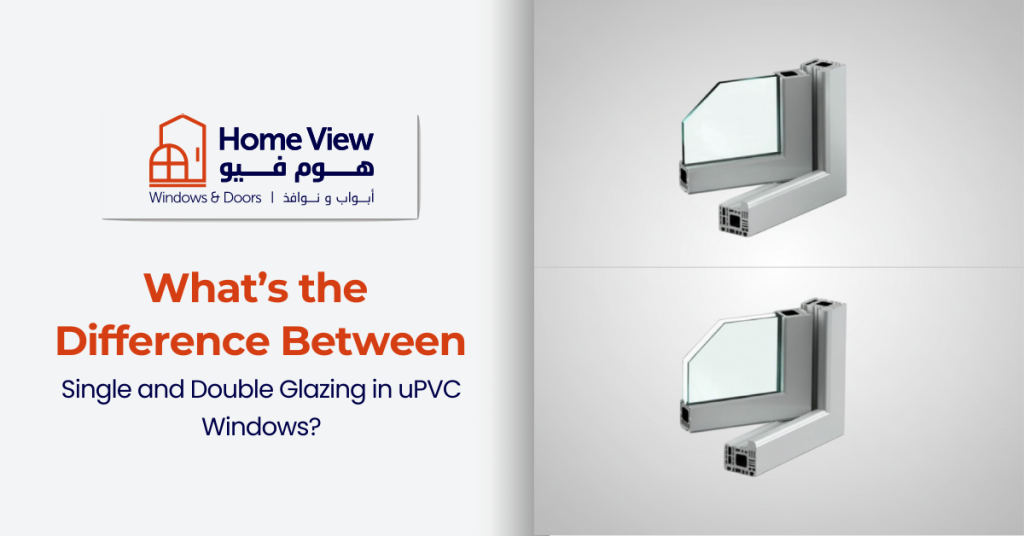
Choosing the type of insulating glass for windows is not an ordinary decision; it is a vital step that determines the level of comfort in your home and immediately affects your direct and monthly costs.
Many customers ask: Is single glass sufficient, or is double glazing better? In this article from Home View Saudi Arabia, we will explain the difference between single and double glazing when installed with uPVC windows.
We will review the most important advantages and disadvantages of each option, along with practical tips suitable for the Kingdom’s climate, so you can choose wisely and obtain more efficient monthly bills.
What is the difference between single and double glazing in uPVC windows?
The fundamental difference is that double glazing consists of two layers of glass with a space between them filled with air or an inert gas, which provides much better thermal and acoustic insulation than single glass, which consists of only one glass layer.
Thanks to this gap, double glazing features higher energy efficiency and reduces heating and cooling costs.
Comparing Single and Double Glazing for uPVC Windows
To clarify the picture further, here is a quick comparison: single glass in uPVC windows relies on only one glass pane, making it simpler and lighter in terms of installation. However, at the same time, it allows a significant amount of heat and cold to enter and does not offer strong insulation against annoying external sounds or noise from busy streets.
On the other hand, double glazing consists of two glass panes with an insulating gap between them—usually filled with air or Argon gas. This design increases thermal insulation strength, keeping your home cool in summer and reducing AC consumption.
Additionally, it provides better sound insulation and higher security because it is less prone to breaking. While its initial cost is higher than single glass, its use in Saudi cities like Riyadh, Jeddah, and Dammam offers better suitability in the long run and significantly lowers electricity bills.
Comparison Table: Single vs. Double Glazing with uPVC Windows
| Feature | Single Insulated Glass | Double Insulated Glass |
| Installation | Lightweight and easier to install, consists of a single layer of glass. | Heavier, requires precision and professionalism to ensure good performance, includes two layers of glass separated by an air or gas space (such as Argon or Krypton). |
| Thermal Insulation | Less efficient, allows heat leakage easily. | Much better insulation, maintains the internal temperature of the building. |
| Acoustic Insulation | Limited insulation against external noise. | Much better noise insulation, limits external din. |
| Energy Efficiency | Less efficient, leading to higher energy bills. | More energy-efficient, reducing heating and cooling costs. |
| Cost | Cheaper initially. | Higher initial cost but economical in the long run. |
| Maintenance | Requires little maintenance, but may be subject to condensation. | Needs tracking of the seal status to prevent fogging between the two panes. |
| Security and Sustainability | Relatively easy to breach, less resistant. | More rigid, harder to break, more secure. |
Saudi Climate and uPVC Windows
In Saudi Arabia, we know that the summer climate is extremely hot and dry. uPVC windows with double insulated glass prove their effectiveness here more because they:
- Maintain internal temperature.
- Protect against UV rays.
- Do not allow mold or corrosion.
- Do not require frequent painting or uPVC maintenance.
When mentioning trusted global companies in this regard, examples like Guardian Glass or RENOLIT for colored profiles and luxury touches come to mind.
» Read Also:
uPVC Windows for Smart Homes: How do they help save energy and allow remote control?
Security First: Which one protects your family more?
Security is a fundamental factor when choosing the right uPVC windows for your home; single glass is relatively easy to break, even if the uPVC frame is durable, leaving the house more exposed to risks.
Meanwhile, double glazing enjoys higher durability because it consists of two panes that are difficult to break together, serving as an additional security barrier.
Some types of double glazing also come with special treatments such as laminated glass or tempered glass, which possess properties that double the rigidity and prevent pieces from scattering when broken. This is very important in homes with children in particular.
Is the price difference worth the investment?
The natural question you might have: “Why should I pay more for double glazing?”.
While it is true the initial cost is higher than single glass, if you think of it as a long-term investment, you will find that the extra amount will return to you through savings in electricity and maintenance bills.
For example: If your house relies on AC all year round, the savings resulting from reducing continuous AC operation will cover the price difference within a few years.
In other words, double glazing is not a luxury, but an investment that raises the level of security in your home, gives you long-term peace of mind, and we do not exaggerate when we say it contributes to increasing the property value.
Lifespan and Maintenance
uPVC windows are generally characterized by a long life and low maintenance requirements, but the difference appears when looking at the glass.
Single glass has a long lifespan, but it is easily exposed to condensation on the inner surface when there is a temperature difference between inside and outside.
As for double glazing, it is characterized by its ability to resist condensation, provided the seal between the two panes is tight. If the seal is lost over time, fog or steam may appear between the panes, requiring repair or replacement.
The tip here: Ensure the company you choose for window installation uses high-quality sealing techniques suitable for the hot climate in the Kingdom, so the glass serves you for many years without issues.
Dimensions and Glass Thickness: What is most suitable for the Kingdom’s climate?
Glass thickness and the distance between the panes in double glazing have a direct impact on performance. In Saudi Arabia, it is usually recommended to use glass with a thickness of at least 4 mm per pane, with a gap ranging from 12 to 20 mm filled with air or Argon gas.
This measurement provides an excellent balance between thermal/acoustic insulation and cost. Thinner glass may not provide the required insulation, and thicker glass may raise costs unjustifiably. Therefore, it is important to consult specialists before purchasing to ensure specifications match your home’s needs.
Is Interior Design affected by glass type?
The atmosphere inside a room is not only regulated by heat and cold but also by natural lighting. Single glass allows a larger amount of light to enter, but it may transmit heat with it.
Double glazing does not prevent natural light from entering, but it reduces the UV rays that cause furniture and curtains to fade. This means you are able to maintain the beauty of your home interior for longer without affecting the decor or colors.
Some customers prefer adding reflective or tinted layers to double glazing for more control over lighting. These options are available and suitable if you want to balance privacy and visual comfort.
Golden Tips for Choosing the Best Window Glass
- If your budget is limited and you need a quick installation, single glass may be a practical option, but note that it will affect your AC consumption in the hot summer.
- If you live in crowded city areas, double glazing is an excellent choice for sound insulation.
- Do you want long-term savings on cooling and heating? Investing in double glazing provides a lot.
- Ensure the sealing quality between the panes, especially in a climate like Saudi Arabia, as high heat can cause seal degradation over time.
- Ensure you choose an appropriate glass thickness (such as 4 mm) and the recommended gap distance between panes to guarantee the best thermal and acoustic performance.
Caution! Mistakes you might make when choosing Double Glazing
- Double glazing increases window weight, which might raise the frame or installation cost.
- A very wide spacer (more than 20 mm) can cause internal air currents that reduce thermal insulation.
- Thin glass thickness (less than 4 mm) might not provide the same sound insulation level compared to thicker glass.
- Insulated units need good maintenance for the desiccant (inside the spacer) to avoid condensation.
What’s Next After Knowing the Difference Between Glass Types?
After reviewing the difference between double and single glazing with uPVC windows, it is clear that the correct choice depends on your needs, lifestyle, and initial budget.
Single glass may be an economical and easy-to-install option, but it does not provide strong insulation against the Saudi summer heat or sound insulation in city centers.
Meanwhile, double glazing provides greater comfort, superior thermal and acoustic insulation, and additional security, with long-term savings on electricity bills.
If you want precise specifications suitable for your project or home, the Home View team can conduct a free site assessment and choose the ideal glass thickness and distance according to the required insulation. Contact us for a free consultation now!
FAQs about the Difference between Single and Double Glazing in uPVC Windows
What is single glass?
Single glazed uPVC refers to a single glass pane inside a uPVC frame. It is simple and easy to install, but it is less insulated in terms of heat and sound.
What is double glass?
Double glazed uPVC consists of two glass panes separated by a space usually filled with air or an insulating gas like Argon, which increases insulation capacity compared to other single-layer glass windows.
Is double glazing better than single glass?
Double glazed windows have many advantages compared to single glazed windows; they are more energy-efficient and provide better thermal insulation, resulting in lower heating and cooling costs. They also provide better acoustic insulation, creating a more peaceful and quiet living environment.
What is the difference between single and double glazing?
The difference lies in the number of glass layers in each of the window types. Single-pane windows consist of one layer, and double-pane windows consist of two layers, with Krypton or Argon gas in between.
Although single-pane and double-pane windows look similar externally, they differ significantly in terms of cost and energy efficiency.
What are the downsides of single glazed windows?
A single glass pane allows a large amount of heat transfer from inside to outside, meaning significant heat loss in winter and heat gain in summer, not to mention a higher likelihood of breakage.
What are the downsides of double glazed windows?
In the case of imperfect installation, difficulty opening or closing glass windows may cause a disruption in your daily life and negatively affect energy efficiency.
The window mechanism or frame may fail for many reasons, such as excessive heat, misalignment due to incorrect installation, or harder hinge movement, which may lead to part erosion.
Among prominent downsides is increased weight with double glazing which may affect the frame, and if the seal is not perfect, fog may condense between the panes.
What is the ideal double glazing thickness?
Usually 4 mm per pane.
What is the ideal distance between double glazing panes?
Between 12 and 20 mm depending on required performance.
Does a wide spacer between double glazing panes harm insulation?
Yes, if it exceeds 20 mm, it may reduce performance.
Is thin glass bad?
Not necessarily, but it provides less acoustic insulation compared to thicker glass or more glass panes.


