

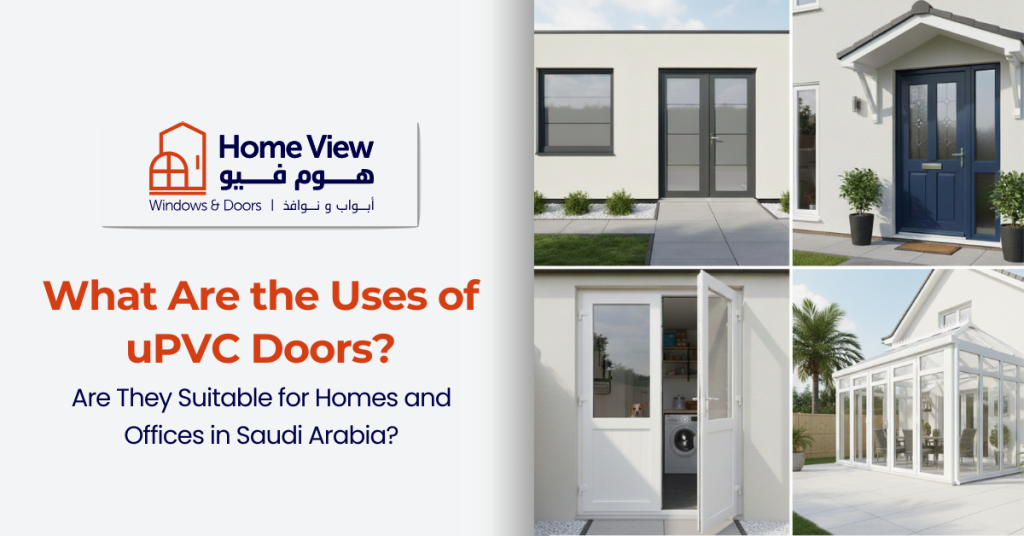
In the world of building materials, and with the increasing demand for materials that combine excellent performance with balanced cost, uPVC doors have emerged as a popular choice among those seeking a practical, durable, and elegant product that fits the lifestyle in Saudi homes and companies, from Riyadh to the Eastern Province.
These doors are used as barriers and entrances, and go beyond that to cover multiple needs in modern homes—between the interior and exterior, and from main rooms to dedicated spaces such as bathrooms and balconies.
This article from Home View Saudi Arabia explains some uses of uPVC doors and why they have become an excellent choice in the Saudi market, while clarifying the practical benefits of each type and application.
What are uPVC doors? And why are they used?
Before we discuss the uses of uPVC doors, let us quickly clarify what the term means:
uPVC is an abbreviation for Unplasticized Polyvinyl Chloride.
Meaning: Polyvinyl chloride without added plasticizers.
This material is rigid and non-flexible unlike regular PVC, which gives it higher resistance to weather factors, heat, and moisture, and it does not require frequent maintenance like wood or aluminum.
The most popular uses of uPVC doors and what suits each application
uPVC doors can be used in several locations inside and outside the building, providing clear practical benefits in each case, including:
1. Exterior uPVC Doors (Main Entrance / Back Doors)
These doors are used as main or back entrances and provide you with:
- Higher security thanks to the possibility of installing multi-point locks with fixed, burglar-resistant hinges.
- Thermal and acoustic insulation that reduces the entry of extreme heat or noise from the outside.
- Weather resistance (sun, dust, rain), which is crucial in the Saudi climate.
This application is ideal for main entrances, or for garden and large balcony doors.
2. Interior uPVC Doors
uPVC doors are used inside the building between rooms for the purpose of:
- Improving acoustic insulation between spaces.
- Ease of uPVC maintenance and cleaning compared to wood or metals.
- Elegant designs that complement the interior decor.
These doors come in multiple styles, such as hinged or sliding, and are an excellent choice for bedrooms or interior living rooms.
3. uPVC Doors for Bathrooms and Kitchens
It is preferred to use uPVC doors in damp areas of buildings because they are:
- Moisture resistant; they are not affected by water and do not crack like wood.
- Insulated against odors and steam.
- Do not require periodic maintenance over time.
This makes them ideal for bathroom and kitchen doors in Saudi homes, where humidity can be high in some seasons like the hot, humid summer, or even during Ramadan with the heavy use of kitchen equipment.
4. uPVC Doors for Balconies and Gardens
uPVC doors are also used in balconies overlooking gardens or outdoor spaces:
- Sliding or folding designs that allow for wide ventilation of the place.
- They provide panoramic views while maintaining insulation and air quality inside the home.
This use is ideal for those who have outdoor seating areas or a rest house on their property and want to benefit from the flexibility of opening and closing the interior space with the outdoor courtyard.
Comparison table of uPVC doors by application
| Application | Main Benefit | Suitable for |
| Exterior uPVC Doors | Security, thermal, and acoustic insulation | Main and back entrances |
| Interior uPVC Doors | Attractive design, acoustic insulation | Bedrooms, living rooms |
| uPVC Bathroom/Kitchen Doors | High moisture resistance | Bathrooms, kitchens |
| uPVC Balcony/Garden Doors | Wide openings, beautiful view | Balconies, gardens |
» Read also about:
The Best uPVC Prices in Saudi Arabia for Doors and Windows
uPVC Doors in Residential Apartments
In Saudi apartments, uPVC doors are widely used as interior and exterior apartment doors due to the sound insulation they provide between residential units, their resistance to intensive daily use, and their ease of maintenance and style control compared to traditional wooden doors.
4 Benefits of uPVC doors compared to traditional materials
1- Excellent Thermal and Acoustic Insulation
uPVC doors reduce the transmission of heat and noise compared to wooden doors or aluminum.
2- Weather Resistance
The materials do not rust and are not affected by moisture.
3- Low Maintenance
Simple cleaning with steam or water is sufficient without the need for periodic painting.
4- Higher Security
Possibility of installing door accessories and additional attachments to double the protection. The security of exterior uPVC doors for apartments and secondary entrances can be enhanced via multi-point locking systems, along with concealed hinges and lockable handles, raising the protection level without affecting the door’s aesthetic appearance.
Suitability of uPVC doors for the Saudi climate
uPVC doors are distinguished by their high ability to withstand the harsh climatic conditions in Saudi Arabia, such as high temperatures, dust, and humidity in coastal and central regions.
The material itself does not expand or crack easily and is not affected by UV rays, so it is a suitable choice for homes in Riyadh, the Eastern Province, and coastal cities alike, with long-term stability in performance and appearance.
» Also learn about:
How to choose the right uPVC windows for your home
Top FAQ about uPVC door applications
What is the difference between PVC and uPVC doors?
PVC doors contain plasticizing materials that make them more flexible and less stable in harsh climates, while uPVC is rigid and unplasticized, giving it higher resistance to heat, moisture, and UV rays—which is why it is the preferred material for use in doors today.
Disadvantages of uPVC doors?
One disadvantage of uPVC doors is that they may be slightly more expensive than some other materials, and sometimes color options might be fewer than wood or aluminum. However, they compensate for this with long-term performance benefits and practical applications in various commercial and residential buildings.
Which is better for doors, PVC or uPVC?
In general, uPVC is better than PVC for doors because it is more resistant to heat and moisture and withstands outdoor conditions better.
What is uPVC material?
uPVC is Unplasticized Polyvinyl Chloride, which gives it higher rigidity and excellent stability against weather conditions compared to regular PVC material.
The latest trends and applications for uPVC doors
Whether you are looking for exterior uPVC doors for entrances, interior doors for bedrooms, or even moisture-resistant doors for bathrooms and kitchens, uPVC doors are a practical and economically sustainable choice that lasts for years. Furthermore, they keep pace with the latest decor and security trends simultaneously!
At Home View Khobar, we help you choose the right door based on the place of use and required security level, with precise measurements and a genuine quality guarantee.
We are ready to provide a customized free consultation and a suitable price quote according to your needs. Contact us today to get a high-performance practical product that provides insulation, protection, security, and beauty in every corner!


